
EDUCATION

China Culture & Technology Discovery Jounery
In partnerships with Top 100 Chinese universties
SEE THE REAL CHINA
Immerse yourself in real China through hands-on experiences—gain insights into its cultural roots and modern innovations, witness the coexistence of historic relics and cutting-edge cities, and explore China’s education system, innovative ecosystem, and technological applications.
ENGAGE WITH PEERS
Connect with Chinese peers from top universities! Engage in multifaceted interactions spanning academics, culture, daily life, and leisure—building cross-cultural friendships while exchanging ideas on education, technology, and social issues.
EXPLORE CAREER PATHS
Visit leading tech companies and institutions to uncover China’s entrepreneurial landscape and innovation models. Explore potential research avenues, and enrich your professional profile with valuable China-focused experience for future career endeavors.
About
We are proud to collaborate with 100 of China's leading universities to curate an exclusive summer camp experience. Open to undergraduates and postgraduates across the globe, our programme features diverse sessions including academic exchanges, cultural immersion, and introductory research opportunities. Immerse yourself in the academic heritage and cultural charm of China’s premier universities, and make the most of your summer to forge ahead with purpose.
Expected Date: July - August 2026
Duration: 2 weeks
Target Group: International undergraduates
Cities to Explore
Beijing 北京
As China’s capital, Beijing is an international metropolis that blends profound historical heritage with modern vitality. With a history spanning over 3,000 years, it boasts 7 UNESCO World Heritage Sites, including the Palace Museum, the Great Wall, and the Summer Palace.
Beijing is also China’s cultural, technological, and financial hub: Zhongguancun is home to a cluster of high-tech enterprises, while Financial Street oversees assets exceeding 120 trillion yuan. Additionally, the city abounds in cultural resources—featuring 126 national intangible cultural heritage items such as Peking Opera and Cloisonné, as well as iconic cultural landmarks like the National Centre for the Performing Arts (NCPA) and the 798 Art Zone.
 |  |
|---|---|
 |  |
 |  |
Xi'an 西安
As the capital of Shaanxi Province, Xi’an served as the imperial capital for 13 dynasties in China. It was also the capital of the Qin Dynasty—the first unified imperial dynasty in Chinese history—home to the Terracotta Army, a world-renowned wonder.
Additionally, iconic attractions include the Giant Wild Goose Pagoda, the Ancient City Wall of the Ming Dynasty, and the Forest of Steles Museum. Known as a "Carbohydrate Paradise," Xi’an offers hearty Guanzhong-style delicacies such as Roujiamo (Chinese hamburger), Yangrou Paomo (lamb soup with steamed bread), and Youpo Noodles (spicy oil-splashed noodles). Meanwhile, the Datang Everbright City brings the prosperity of the Tang Dynasty to life through modern lighting and projection technologies, showcasing a contemporary Xi’an where ancient heritage meets modern vitality.
 |  |
|---|---|
 |  |
 |  |
Shanghai 上海
As China’s hub for economy, finance, trade, shipping, and technological innovation, Shanghai boasts a privileged geographical location at the estuary of the Yangtze River. A global metropolis blending Eastern and Western cultures, it has forged a unique Shanghai-style culture (Haipai Culture). The skyscraper cluster in Lujiazui stands as the city’s iconic landmark, including the Oriental Pearl TV Tower and Shanghai Tower. The Bund’s "Gallery of World Architecture" contrasts sharply with the modern skyline of Lujiazui across the river, showcasing the harmonious coexistence of Shanghai’s history and modernity.
Renowned as a culinary paradise, Shanghai is famous for its local cuisine—characterized by rich sauces and mellow flavors—while also gathering global delicacies from around the world.
 |  |
|---|---|
 |  |
 |  |
Suzhou 苏州
Suzhou is a national historical and cultural city of China. First established as the capital of the State of Wu in 514 BCE, it boasts a wealth of cultural heritage bequeathed by its long-standing history and stands as a paragon of garden culture.
As a major industrial hub and manufacturing powerhouse in China, Suzhou also serves as a vital financial, cultural, educational and transportation hub of Jiangsu Province.
Moreover, it is one of the birthplaces of the Wu culture in the Jiangnan region, hailed as “Paradise above; Suzhou and Hangzhou below” and recognized as the cradle of Su-style cuisine, one of China’s three great culinary traditions.
 |  |
|---|---|
 |  |
 |  |
Chengdu 成都
As the birthplace of the ancient Shu civilization, Chengdu is also known by its elegant aliases "Jinguancheng" (City of Brocade) and "Rongcheng" (City of Hibiscus). Blessed with fertile land on the Chengdu Plain, thanks to the Dujiangyan Irrigation Project, it has long been hailed as the "Land of Abundance." With a time-honored history and splendid culture, sites like the Jinsha Ruins and Wuhou Shrine bear witness to Chengdu’s glorious past.
Renowned as a culinary capital, Chengdu is famous for world-famous delicacies such as hot pot, Chuanchuanxiang (spicy skewers), Longchaoshou (soup dumplings), and Dandan noodles. Additionally, Chengdu boasts a relaxed pace of life and a thriving teahouse culture—locals love to gather in teahouses to drink tea, chat, and play cards, savoring every leisurely moment.
 |  |
|---|---|
 |  |
 |  |
Guangzhou 广州
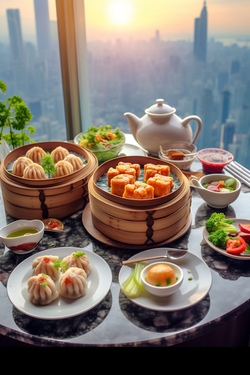
Located in the northern edge of the Pearl River Delta, Guangzhou borders the South China Sea and is adjacent to Hong Kong and Macao. Home to all 56 ethnic groups of China, it bears historical traces and witnesses the contemporary inheritance of five major religions including Buddhism, Taoism and Islam. As a national central city, Guangzhou perfectly blends a millennia-old cultural heritage, dynamic modern vitality and an inclusive spirit.
It has a subtropical monsoon climate, with blooming flowers all year round, which earns it the nickname "City of Flowers". Cantonese, the prevalent dialect here, is hailed as a "living fossil of ancient Chinese" for preserving numerous elements of archaic Chinese.
With a history of over 2,200 years of urban construction, Guangzhou is China’s only ever-open foreign trade port and has been a starting point of the Maritime Silk Road since the Han and Tang dynasties. As the cradle of Lingnan culture, traditional customs such as morning tea drinking and dragon boat racing are deeply embedded in the daily lives of its residents.
 |  |
|---|---|
 |  |
 |  |
Get More Information
Please contact us for more information.